Afghanistan’s persisting outlook on Pakistan: Lessons for Islamabad’s Afghan policy

1. Introduction and background Pakistan has a unique relationship with Afghanistan. The two countries share a 2,570 km long border, also called Durand Line, and have numerous cultural, ethnic and religious connections. The former Afghan leader Hamid Karzai once described the two countries as “joined together like twins” and “inseparable.”[1] Yet relations between the two … Read more

Pakistan’s peace talks with TTP: Prospective outcome and implications

1. Background The outlawed Tehreek-i-Taliban Pakistan (TTP) agreed to an indefinite ceasefire with the government of Pakistan on May 29, 2022.[1] The announcement was not much of a surprise as the secret talk process had already been revealed by the media. However, the terms of the ceasefire caused an uproar in the country.[2] Pakistan Peoples … Read more

Afghan displacement prospects after a tricky trimester

Executive summary Forced displacement has been an unfortunate but near constant challenge facing millions of Afghans over the last four decades. Throughout this time, armed conflict has been the biggest driver causing countless Afghans to be internally displaced, or fleeing their country in search of safety. To this day, involuntary displacement keeps millions of Afghans … Read more

Iran’s Afghan policy after the U.S. withdrawal: Implications for Pakistan and the region

Asif Durrani has been a career diplomat for 32 years, who served as Pakistan’s ambassador to the UAE and Iran. In his early diplomatic career, he was posted to India, Afghanistan, UK, and Pakistan Mission to the United Nations in New York. Before joining the Foreign Service of Pakistan in 1986, Ambassador Durrani worked as a journalist focusing on Afghanistan and Iran. He is an alumnus of Balochistan University, Quetta, and the School of Oriental and African Studies (SOAS), University of London. He regularly contributes to national and international media. Currently, he is serving as a Senior Research Fellow in Islamabad Policy Research Institute (IPRI). 

The peace nobody believed in

Marco Mezzera is a political analyst and mediation expert with a geographical focus on Asia. In his last position as Senior Adviser at NOREF Norwegian Centre for Conflict Resolution, he managed, among others, the “Philippines” and the “Military Dialogues” programs, and in-house Track II mediation efforts. Prior to joining NOREF, he worked as a research … Read more

CPEC in Balochistan: Local concerns and implications

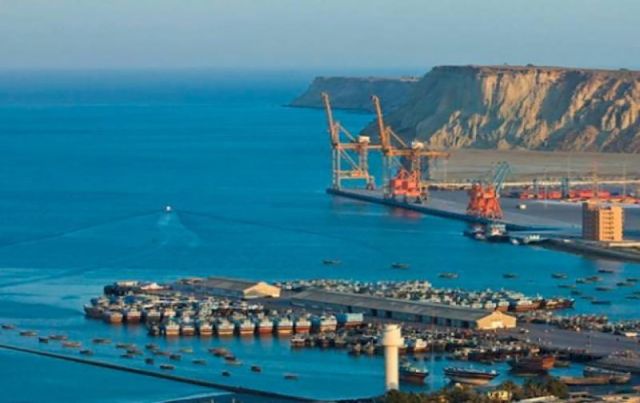
CPEC is a project of opportunity as well as risk for Balochistan. Therefore, a lot will depend on how CPEC is executed in the province in terms of giving a due share and economic benefits to the Baloch people. A perceived sense of discrimination can further fuel the anti-federation sentiments in the province and strengthen … Read more

Politics of Exclusion: A case study of 2nd Constitutional Amendment

The 2nd Constitutional Amendment, passed in 1974, paved way for excluding Ahmadi community from the national mainstream. In the larger scheme of things, the second amendment reinforced the policy of state excluding some segments of the society from national mainstream. It transcended the ideological leanings of the parties in power – the left-leaning Bhutto was … Read more

Terrorism financing

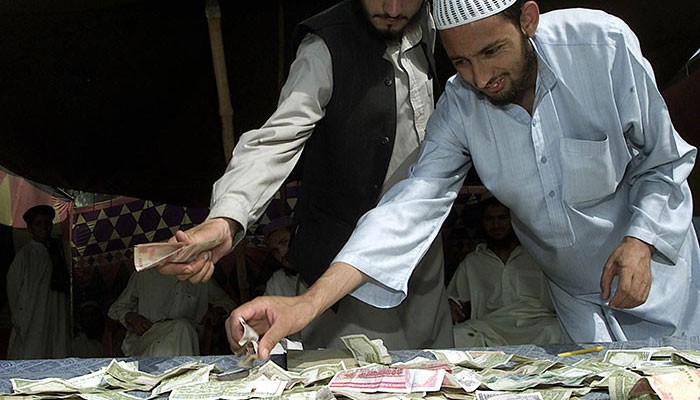
Pakistan’s counter terrorism (CT) efforts often revolve around intelligence gathering, followed by policing, and, in many cases, undercover intelligence-led operations. These are no doubt integral CT components. But for counter-terror efforts to be effective in the longer term, the approach should be multipronged, also focusing on funding of terrorist activities. An important CT activity, therefore, … Read more