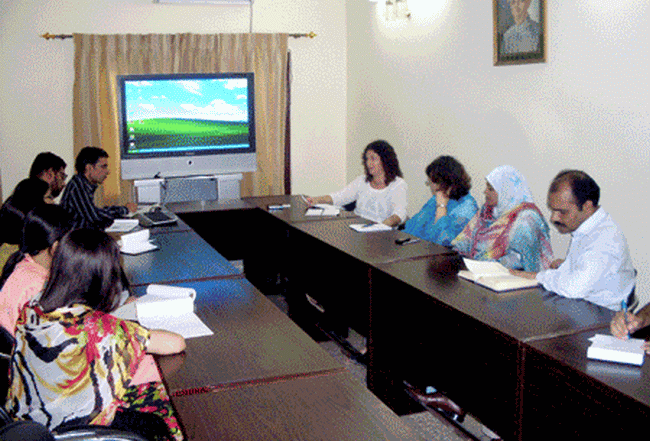
Taliban insurgency is thriving in FATA noted PIPS new book
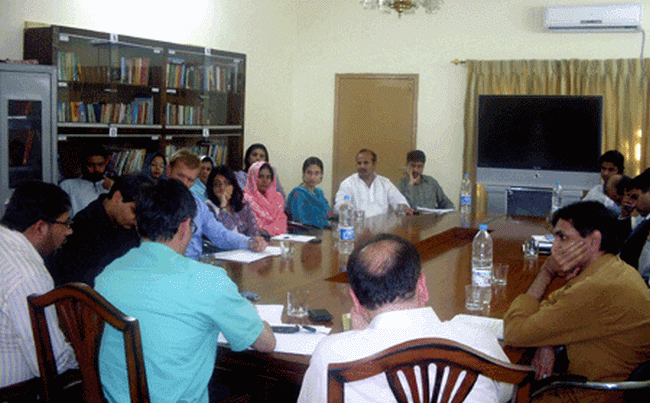
After September 11, 2001 the militant networks have become stronger and well entrenched in the Federally Administered Tribal Areas of Pakistan (FATA); while the militant economy has surpassed the volume of $ 6bn per annum. The dynamics of insurgency in FATA is very complex and intertwined with the recent developments in Afghanistan and thus have … Read more
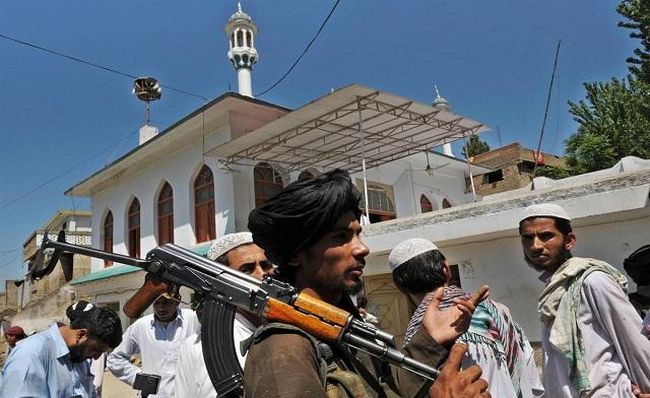
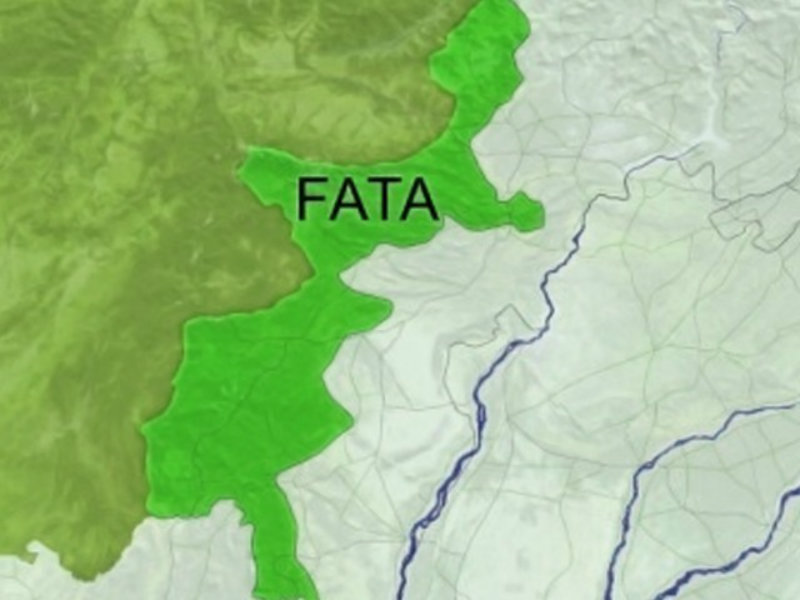
Understanding FATA

The  Afghan  Islamists’  political  failure  to  produce  realistic  agendas  for  change1  is  cited  by  some analysts  as  an  example  of  the  failure  of  political  Islam.  Some  others  however  argue  that  Muslim societies  seem  to  have  been  characterized  in  the  20th  century  by  two  contradictory  structures.  The clan,  tribe  and  ethnic  group  does  not  seem  to … Read more

Assessing the reporting, approach and impact of militants’ print media in Pakistan

An analysis of militants’ media in Pakistan evading discussion on the role of the mainstream media will not be a true description of the ‘narrative’ being pursued and promoted by the former. It is really hard to skip over the opinion that has been repeated throughout this seminar that a part of Pakistan’s mainstream media … Read more

Tribes and militants in the Arab world

In the Middle East, militant jihadi groups have proven quite good at providing a focal point for existing grievances, but have been quite bad at taking this to the next level and offering people something in return for their support, argued Sarah Phillips who is an Associate Lecturer at the Centre for Security Studies at … Read more

America has limited role to play in FATA: Joshua T. White

“The US leads the global war against terrorism, however, it has very limited role to play in Pakistan’s Federally Administered Tribal Areas (FATA). The US should not or cannot deploy its forces in FATA, and such deployment is itself a bad idea. It is principal task of Pakistan to counter the militants in that region. … Read more

Radicalization in Pakistan: Journalists see media’s reconciliatory role as desirable

Radicalization has become too a complex phenomenon in Pakistan to be tackled by media alone. Media should, however, play the role of a mediator between government and the people. Becoming a motivational force for peace, Pakistani media can initiate a dialogue and based-on-it reconciliation. But for this, media groups and journalists would have to adopt … Read more

Groups and movements become radical in a ‘comparative perspective’: Dr. Muhammad Islam

“Radicalization is a group phenomenon where views and actions become violent in a ‘comparative perspective’. Radicalization is generally described as a situation in which groups or society [as a whole] resort to use of violent tactics. But this will be incomplete definition. Radicalization actually occurs at the level of ‘perceptions or ideas’ (ideology) even before this … Read more

Terrorism is a product of strategic choices and psychological forces: Prof. Adam Dolnik

There is something more than mere psychological forces which motivates people to become terrorists. Terrorism is a strategic choice opted by the terrorists to correct their perceived [and stated] sense of the deprivations, grievances and injustices. This was stated by Prof. Adam Dolnik while addressing a session on “What do we know about why do … Read more

West looks at radicalization of Pakistani youth from a religious lens: Dr. Riffat

“The west has tried to look at the issue of motivation of the radicalization of youth in Pakistan from a religious lens. We need to go away from this and look at non-religious factors, which may be contributing as a motivating force,” commented Dr. Riffat Hussein, who is a prominent scholar and professor at Quaid-i-Azam … Read more